Source Bluetooth RGBW LED Strip Controllers for Lighting Projects
Find and compare 30 Bluetooth RGBW LED Strip Controller options from verified manufacturers. Evaluate features like APP control, remote distance, and input voltage to select the right solution for your LED lighting needs.
Key considerations
Products List
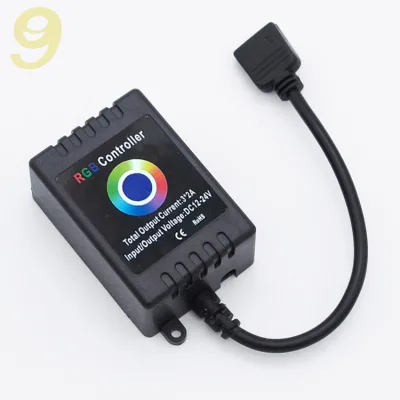
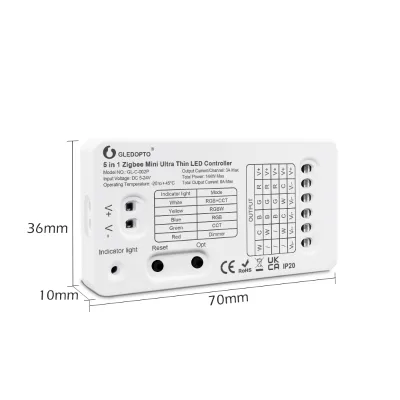


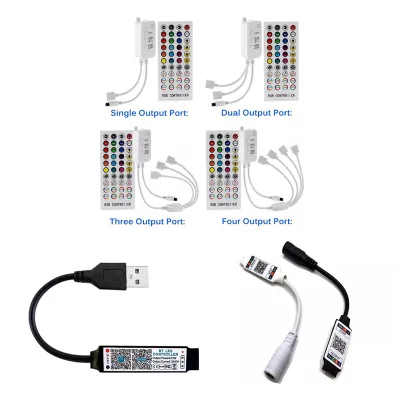


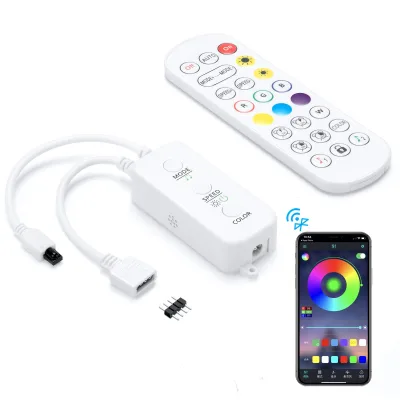


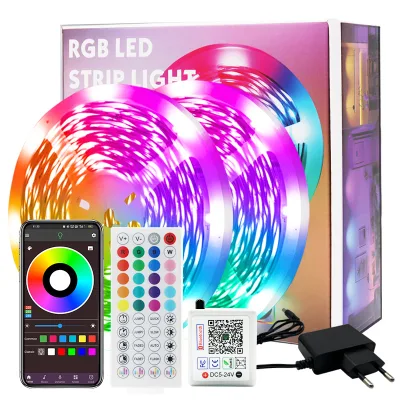

120V 220V 5050 RGB LED Strip Light 14W/M Remote Control Bluetooth Controller
$1.35 - $1.40
MOQ: 500 Meters


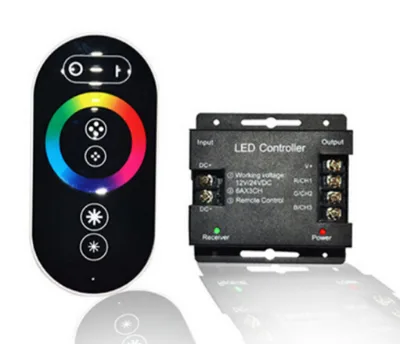
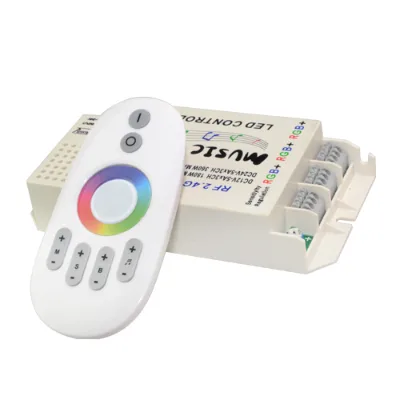
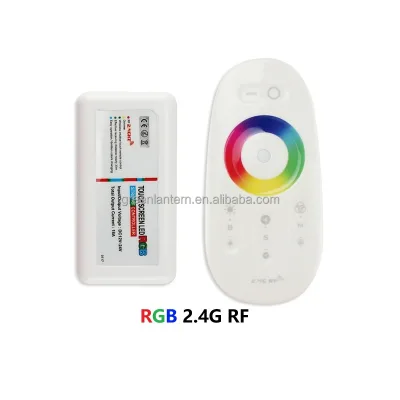
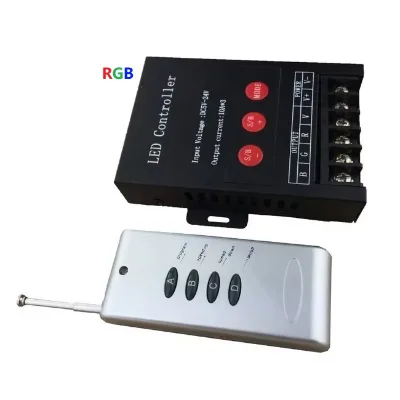
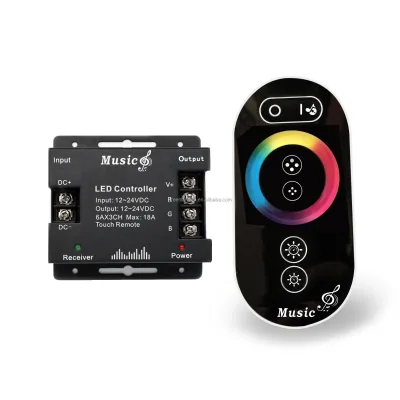

Rgbic Smart LED Kit Music Sync Remote Control Bluetooth LED Light Strips
$0.95 - $1.00
MOQ: 100 Meters


Comprehensive Sourcing Guide
Bluetooth RGBW LED Strip Controller Sourcing Guide
The Bluetooth RGBW LED Strip Controller represents a specialized category of smart lighting hardware designed to bridge mobile connectivity with high-fidelity illumination control. Based on observed market listings, these devices typically support both RGB and RGBW color configurations, allowing for precise tuning of white temperature alongside full-spectrum color mixing. The core functionality relies on wireless communication protocols, with Bluetooth serving as the primary interface for direct smartphone interaction, often complemented by RF remote controls for simplified operation. Buyers should note that while the primary keyword focuses on Bluetooth, the observed product data indicates a convergence of technologies, where some units also integrate ZigBee capabilities or APP-based control modes to enhance ecosystem compatibility.
Procurement decisions for this component must account for the specific electrical requirements of the target installation, as input voltage ranges vary significantly across available models. The observed data highlights a common input voltage specification of DC 5V to 24V, which dictates the power supply selection and the type of LED strips that can be safely driven. Furthermore, the maximum load power is a critical constraint, with specific listings indicating a capacity of up to 144W, while others may be rated for lower outputs like 60W. This variance necessitates a rigorous verification step where the buyer calculates the total wattage of their intended LED strip run to ensure the selected controller does not exceed its rated current or power limits, preventing overheating or premature failure.
Product Scope and Observed Listing Signals
The market for Bluetooth RGBW controllers presents a diverse range of product attributes that signal different levels of sophistication and intended use cases. Listings frequently describe the item as a "bluetooth led controller" or "zigbee led controller," suggesting that the physical form factor and internal circuitry may be adaptable to multiple wireless standards. The observed product names and keywords indicate that these units are often marketed as part of a broader "Smart Home Solution," implying they are designed to integrate with existing home automation ecosystems rather than functioning as standalone switches. Buyers should be aware that the "Product Name" field in supplier catalogs may sometimes conflate different technologies, requiring a close inspection of the "Control Mode" and "Connection Mode" fields to confirm the actual wireless protocol supported.
Physical dimensions and packaging data provide essential clues regarding the installation environment and the complexity of the integration process. Observed single package sizes range from compact 10x5x5 cm units to larger configurations, with corresponding gross weights varying between 0.070 kg and 0.120 kg. These metrics are vital for logistics planning and for determining if the controller can be discreetly mounted within tight LED profile channels or junction boxes. Additionally, the "Material" is consistently noted as fireproof ABS, a standard safety feature for plastic enclosures in lighting applications. However, the "Product Size" field in some listings shows unusually large dimensions like 70x10x37cm, which likely refers to the total system length including cabling or a specific mounting rail rather than the controller unit itself, requiring careful interpretation to avoid procurement errors.
Technical Specifications to Verify
Voltage compatibility and current handling capacity are the most critical technical parameters to validate before finalizing a purchase order. The observed input voltage specifications fluctuate between DC 5V, DC 12V, and a broader range of DC 5V-24V, meaning a single controller model may not be universally compatible with all power supplies. Buyers must cross-reference the specific "Input Voltage(V)" listed for the exact model number, such as the 99-CQ-RGB or GL-C-002P, against their existing power infrastructure. Similarly, the output current is listed as 6A per channel in some high-capacity models, which directly correlates to the maximum power load of 144W. Ignoring these specific electrical ratings can lead to system instability, as the controller may fail to drive the full length of the LED strip or could be damaged by an incompatible power source.
Wireless performance metrics and control interfaces define the user experience and the reliability of the lighting system in operation. The observed "Remote distance" varies from 20 meters to a maximum of 25 meters, which sets the expectation for the effective range of the Bluetooth or RF signal in a typical room environment. While Bluetooth is the primary connection mode, some listings also mention "APP" control or "Smart Remote Control" as the dimming method, indicating that the device may support both direct mobile app connectivity and physical remote buttons. The "Lens Angle" of 120 degrees and the "Luminous Efficacy" of 0 lm/W (indicating the controller itself is not a light source) are secondary but important details for system design. Buyers should verify that the "Control method" aligns with their operational needs, ensuring that the transition between different control modes is seamless and that the signal strength remains stable across the intended coverage area.
Compliance and Safety Documentation
Regulatory compliance is a non-negotiable aspect of sourcing electronic lighting components, particularly for products intended for commercial or residential installation in regulated markets. The observed product data lists a comprehensive set of certifications including CE, RoHS, EMC, LVD, FCC, VDE, SAA, and GS. These certifications indicate that the manufacturer claims adherence to various international safety and electromagnetic compatibility standards, covering everything from electrical shock protection to radio frequency interference limits. However, the presence of these certifications in a product listing does not guarantee that every unit in a specific batch has been tested to the same standard. Buyers must request valid, up-to-date test reports from the supplier to confirm that the specific model they are purchasing holds these certifications for the target export market.
Safety documentation also extends to the physical construction and material safety of the controller enclosure. The "Material" is identified as fireproof ABS, a crucial attribute for preventing the spread of fire in the event of an electrical fault or overheating. This material choice is consistent with the "IP Rating" observations, although the specific IP rating for the controller itself is sometimes listed ambiguously as "IPPPower:11-15W," which likely refers to the power supply's rating rather than the controller's ingress protection. Buyers should explicitly ask for the IP rating of the controller unit to determine if it is suitable for damp locations or requires a protective housing. Additionally, the "Warranty" period, observed as ranging from 2 to 3 years, serves as a proxy for the manufacturer's confidence in their product's durability and compliance with safety standards over time.
Cost Drivers and Commercial Terms
The pricing structure for Bluetooth RGBW LED controllers is influenced by a combination of technical complexity, certification costs, and order volume. The observed price range spans from $0.51 to $16.88, a wide disparity that reflects differences in features such as the inclusion of ZigBee modules, the quality of the internal components, and the level of brand premium. Lower-priced units may offer basic Bluetooth control with limited load capacity, while higher-priced models likely include advanced features like multi-channel support, higher current ratings, or integrated smart home hub capabilities. The "Selling Units" are typically listed as "Single item," but the "MOQ" (Minimum Order Quantity) ranges from 1 to 500 units, indicating that bulk purchasing can significantly impact the unit cost and that suppliers may offer tiered pricing for larger orders.
Commercial terms and logistical factors play a significant role in the total cost of ownership beyond the unit price. The "Place of Origin" is consistently listed as Guangdong, China, a major manufacturing hub that offers competitive pricing but requires careful management of shipping and lead times. The "Single package size" and "Single gross weight" are essential for calculating freight costs, as the volumetric weight of the packaging can sometimes exceed the actual weight of the product. Buyers should also consider the "Lighting solutions service" offered by the supplier, which may include "Lighting And Circuitry Design" or "Project Installation" support. These value-added services can reduce the overall project cost by minimizing the need for external engineering resources, but they must be clearly defined in the commercial agreement to ensure they are included in the quoted price.
Supplier Qualification and Quality Control
Evaluating supplier qualification requires a deep dive into their manufacturing capabilities and their track record for delivering consistent product quality. The observed "Brand Name" varies between generic identifiers like "99" and established names like "Gledopto," suggesting a mix of OEM manufacturers and branded distributors. Buyers should verify the supplier's ability to provide the specific "Model Number" and "Product Name" that matches their technical requirements, as the market contains many similar-looking devices with different internal specifications. The "Customization" option is listed as "Available," which implies that suppliers may be willing to modify the PCB width, package size, or firmware to meet specific project needs. However, customization often introduces longer lead times and higher costs, so buyers must weigh the benefits of a tailored solution against the risks of supply chain delays.
Quality control processes must be rigorously defined to ensure that the received goods match the observed specifications and performance claims. The "Warranty" period of 2 to 3 years is a key indicator of the supplier's confidence in their product, but it should be backed by a clear warranty policy that outlines the process for claims and replacements. Buyers should request a Quality Control Plan that details how the supplier tests for critical attributes such as "Input Voltage" stability, "Remote distance" accuracy, and "Dimming method" responsiveness. The "PCB Width" of 8/10mm is a specific manufacturing detail that can affect the fit and thermal performance of the controller, and it should be verified during the pre-production sample stage. Establishing a clear communication channel for technical support is also essential, as the "Lighting solutions service" often requires ongoing assistance during the installation and commissioning phases.
Long-Term Procurement Checks
Sustaining a successful procurement relationship for Bluetooth RGBW LED controllers requires ongoing monitoring of product consistency and supply chain resilience. The "Keyword" and "Product Name" fields in supplier catalogs can change over time as manufacturers update their product lines or rebrand their offerings. Buyers should maintain a master list of approved model numbers and specifications to ensure that future orders match the original design intent. The "Application" of these controllers is primarily for "Led Light" systems, but as technology evolves, the compatibility with new LED strip types or smart home protocols may shift. Regularly reviewing the "Certification" status of the products is crucial, as regulatory requirements in target markets can change, potentially rendering previously compliant products obsolete.
Long-term viability also depends on the availability of spare parts and the continuity of the "Lighting solutions service" provided by the supplier. The "Warranty" period of 3 years suggests a commitment to product longevity, but buyers must ensure that the supplier has a plan for supporting the product beyond the warranty term. This includes the availability of replacement units, firmware updates, and technical documentation for troubleshooting. The "Remote distance" and "Control mode" features should be periodically tested to ensure they remain effective as the surrounding wireless environment changes. By maintaining a proactive approach to supplier management and product verification, buyers can mitigate the risks of obsolescence and ensure that their lighting projects remain reliable and compliant for the long term.
FAQs
What is the maximum load power for this Bluetooth RGBW LED Strip Controller?
The maximum load power is 144W. This capacity supports high-density LED strips while maintaining stable performance. Ensure your total strip wattage does not exceed this limit to prevent overheating or component failure during continuous operation.
Can this controller be operated via a mobile application?
Yes, it supports smart phone APP control for remote management. This allows users to adjust colors, brightness, and modes directly from their devices. The connection mode is APP, providing convenient wireless control without needing a physical remote.
What input voltage range does the Bluetooth RGBW LED Strip Controller support?
The device supports an input voltage range of 5V to 24V DC. This wide compatibility allows it to work with various LED strip types. Always verify your power supply matches this range to ensure safe and efficient operation of the controller.
Which certifications are available for this Bluetooth RGBW LED Strip Controller?
Certifications include CE, RoHS, EMC, LVD, FCC, VDE, SAA, and GS. These standards ensure compliance with international safety and electromagnetic compatibility regulations. Buyers can verify specific certification documents with suppliers to meet regional import requirements and quality expectations.
What is the typical remote distance for this controller?
The remote distance is up to 20 meters or 25 meters depending on the specific model. This range allows for convenient control from a distance. Factors like obstacles and interference may affect actual performance, so line-of-sight is recommended for best results.
How long is the warranty period for this product?
The warranty period is typically 3 years. Some models may offer a 2-year warranty. This coverage protects against manufacturing defects. Buyers should confirm the exact warranty terms with the supplier before purchase to ensure adequate protection for their investment.